From Wikidata and Wikipedia's lists, which cite UNESCO, the Ramsar Convention, the NTCA and the ASI.
Built1865
ArchitectDavid Ross (architect)
Why it is famous
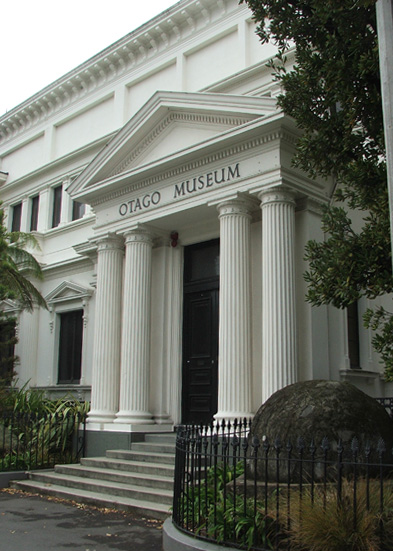
Tūhura Otago Museum, located near the city centre of Dunedin, New Zealand, adjacent to the University of Otago campus, is one of the country's largest museums and a prominent attraction in the city. The museum's extensive collections encompass natural science specimens and humanities artifacts from the Otago region and around the world, which are featured in its long-term gallery displays. A notable feature of the museum is its interactive science centre, which includes an immersive tropical rainforest butterfly house.
About text: Wikipedia (CC BY-SA 4.0), shortened and lightly edited.
Was founded in 1868 and has a collection of over two million artefacts and specimens from the fields of natural history and ethnography. There is also a (paid entry) "Discovery World Tropical Forest". This features a variety of flora and fauna from around the globe, as well as many species of butterfly from Asia and South America. There are around 1,000 butterflies flying at any one time, and the Forest also has tarantulas, birds, fish, turtles and geckos.
What is in the museum
The museum's natural science holdings includes insect and type specimens that are internationally significant, with the spider collections including specimens from the wider Pacific area, as well as a representative collection of arachnids from around the world. Marine invertebrate specimens number in the 40,000s, while 30,000 bird specimens (including nests and eggs) are held. The moa collection is among the world's best, with two out of the three complete moa eggs in the world held, the Ettrick Egg and the First Earnscleugh Egg.
From the "The museum’s collection" part of its Wikipedia article (CC BY-SA 4.0), shortened, not a government source.
Where it is
419 Great King Street
Things to know before your trip to Tūhura Otago Museum
Rules that catch travellers out: liquor, permits, passes, phones, dress and customs. Each one names its source.
Money
Indian notes: up to Rs 25,000
You may take up to Rs 25,000 in Indian notes out of India. Nepal and Bhutan have their own rules.
Coming into India, declare to Customs if your foreign currency notes are worth more than USD 5,000, or all your foreign cash and travellers' cheques together more than USD 10,000.
Duty-free shopping coming home: Rs 75,000 a person
Since 2 February 2026 a resident coming back to India by air or sea may bring goods worth up to Rs 75,000 without duty, plus one new laptop for an adult. One person's allowance cannot be added to another's. Coming back by land, this allowance does not apply.
Only visitors' own ratings are shown; JanWatchdog does not rate places or take money for reviews. See this place on Google Maps, which has its own reviews.
Source: Wikivoyage, Dunedin, written by volunteers (CC BY-SA 4.0), not a government source. Prices and timings may be old; confirm before you travel.