JanWatchdog (जन निगरानी)

See where public money goes, from the Centre to your district

Support Us

Dudhwa National Park

Award winnerTiger reserveNational parkBiodiversity hotspot

Important facts

From Wikipedia's lists and Wikidata, which cite UNESCO, the Ramsar Convention, the NTCA and the Ministry of Environment.

KindTiger reserve, National park
StateUttar Pradesh
Area490 sq km
Tiger reserve area, core and buffer2,201.77 sq km
Set up1977
Tiger reserve since1987
Tigers counted in 2022135 (NTCA estimate)
Biodiversity hotspotHimalaya (Conservation International's 2016 map)
Animals named21

Timings, tickets and the route from Lakhimpur.

Dudhwa National Park on the Lakhimpur pages

Find the way there.

Route on the map

Awards and certifications

CA|TS accreditation (Conservation Assured | Tiger Standards), 2021

Accredited for meeting the global standards for managing a tiger reserve. 14 reserves in India were accredited on 29 July 2021.

Given by Global Conservation Assured | Tiger Standards, announced by the Ministry of Environment, Forest and Climate Change. Source: PIB, Ministry of Environment, Forest and Climate Change, 29 July 2021

Animals of Dudhwa National Park 21

Threatened, on the IUCN Red List 11

Critically Endangered, Endangered, Vulnerable or Near Threatened.

Bengal florican
Photo: Richard Lydekker, Public domain
Bengal floricanBird, IUCN: Critically EndangeredHoubaropsis bengalensis

Critically Endangered

Click to know more
Red-headed vulture
Photo: Davidvraju, CC BY-SA 4.0
Red-headed vultureBird, IUCN: Critically EndangeredSarcogyps calvus

Critically Endangered

Click to know more
White-rumped vulture
Photo: (Image: Goran Ekstrom), CC BY 2.5
White-rumped vultureBird, IUCN: Critically EndangeredGyps bengalensis

Critically Endangered

Click to know more
Bengal tiger
Photo: Tisha Mukherjee, CC BY-SA 4.0
Bengal tigerMammal, IUCN: EndangeredPanthera tigris tigris

EndangeredNational animal of India

Click to know more
Hispid hare
Photo: Bed Bahadur Khadka, CC BY 4.0
Hispid hareMammal, IUCN: EndangeredCaprolagus hispidus

Endangered

Click to know more
Barasingha
Photo: T. R. Shankar Raman, CC BY-SA 3.0
BarasinghaMammal, IUCN: VulnerableRucervus duvaucelii

VulnerableState animal of Uttar Pradesh

Click to know more
Fishing cat
Photo: Kelinahandbasket, CC BY 2.0
Fishing catMammal, IUCN: VulnerablePrionailurus viverrinus

VulnerableState animal of West Bengal

Click to know more
Sambar deer
Photo: Rashityagi, CC BY-SA 4.0
Sambar deerMammal, IUCN: VulnerableRusa unicolor

VulnerableState animal of Odisha

Click to know more
Indian rhinoceros
Photo: Aditya Pal, CC BY-SA 4.0
Indian rhinocerosMammal, IUCN: VulnerableRhinoceros unicornis

Vulnerable

Click to know more
Sloth bear
Photo: Saumitra Newalkar, CC BY-SA 4.0
Sloth bearMammal, IUCN: VulnerableMelursus ursinus

Vulnerable

Click to know more
Swamp francolin
Photo: Dibyendu Ash, CC BY-SA 4.0
Swamp francolinBird, IUCN: Near ThreatenedOrtygornis gularis

Near Threatened

Click to know more

Famous here 4

Named in the description of this place, or a national or State animal or bird.

Chital
Photo: Charles J. Sharp, CC BY-SA 4.0
ChitalMammal, IUCN: Least ConcernAxis axis

State animal of Telangana

Click to know more
Indian elephant
Photo: Yathin S Krishnappa, CC BY-SA 3.0
Indian elephantMammalElephas maximus indicus

National heritage animal of India

Click to know more
Indian peafowl
Photo: Praveenp, CC BY-SA 4.0
Indian peafowlBird, IUCN: Least ConcernPavo cristatus

National bird of India

Click to know more
Sarus crane
Photo: Charles J. Sharp, CC BY-SA 4.0
Sarus craneBirdAntigone antigone

State bird of Uttar Pradesh

Click to know more

Other animals 6

Golden jackal
Photo: Giles Laurent, CC BY-SA 4.0
Golden jackalMammal, IUCN: Least ConcernCanis aureusClick to know more
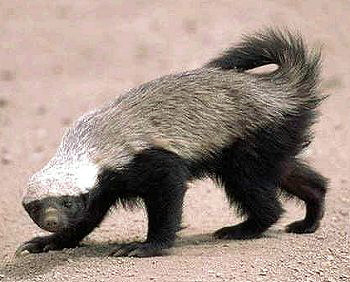
Honey badger
Photo: en:User:Jaganath, CC BY-SA 3.0
Honey badgerMammal, IUCN: Least ConcernMellivora capensisClick to know more
Indian leopard
Photo: Davidvraju, CC BY-SA 4.0
Indian leopardMammalPanthera pardus fuscaClick to know more
Jungle cat
Photo: L. Shyamal, CC BY-SA 3.0
Jungle catMammal, IUCN: Least ConcernFelis chausClick to know more
Leopard cat
Photo: Soumyajit Nandy, CC BY-SA 4.0
Leopard catMammal, IUCN: Least ConcernPrionailurus bengalensisClick to know more
Painted stork
Photo: JJ Harrison (https://www.jjharrison.com.au/), CC BY 3.0
Painted storkBird, IUCN: Least ConcernMycteria leucocephalaClick to know more

Animals named in its Wikipedia article (CC BY-SA 4.0, not a government source), which may name animals seen once or no longer found there. IUCN status: Wikidata, from the IUCN Red List. Found only in India: Wikipedia's list of India's endemic animals. Photos: Wikimedia Commons.

About

Dudhwa National Park is a national park in the Terai belt of marshy grasslands in northern Uttar Pradesh, India. It stretches over an area of 490.3 km2, with a buffer zone of 190 km2. It is part of the Dudhwa Tiger Reserve in the Lakhimpur Kheri district.

About text: Wikipedia (CC BY-SA 4.0), shortened.

Cities nearby on our pages

Dudhwa National Park
Photo: Abhishek Shastri, CC BY-SA 2.0
Dudhwa National ParkAbout 5 km away in a straight lineClick to know more
Lakhimpur
Photo: Arshadhs at en.wikipedia, CC BY-SA 3.0
LakhimpurAbout 58 km away in a straight lineClick to know more
Pilibhit
Photo: Shamikh Faraz, CC BY 3.0
PilibhitAbout 89 km away in a straight lineClick to know more

Tags and facts: Wikidata (CC0), from UNESCO, the Ramsar Convention, the National Tiger Conservation Authority and the Archaeological Survey of India; lists and descriptions from Wikipedia (CC BY-SA 4.0), not a government source; biodiversity hotspots from Conservation International's 2016 map (CC BY-SA 4.0); photos from Wikimedia Commons. Awards: the source named with each.