JanWatchdog (जन निगरानी)

See where public money goes, from the Centre to your district

Support Us

Gautala Autramghat Sanctuary

Wildlife sanctuary

Important facts

From Wikipedia's lists and Wikidata, which cite UNESCO, the Ramsar Convention, the NTCA and the Ministry of Environment.

KindWildlife sanctuary
StateMaharashtra
District or townAurangabad, Jalgaon
Area260.61 sq km
Set up1986
Animals named14

Timings, tickets and the route from Chhatrapati Sambhaji Nagar.

Gautala Autramghat Sanctuary on the Chhatrapati Sambhaji Nagar pages

Find the way there.

Route on the map

Animals of Gautala Autramghat Sanctuary 14

Found only in India 1

Native to India and found nowhere else in the wild.

Brown palm civet
Photo: Kalyanvarma, CC BY-SA 3.0
Brown palm civetMammal, IUCN: Least ConcernParadoxurus jerdoni

Only in India

Click to know more

Threatened, on the IUCN Red List 3

Critically Endangered, Endangered, Vulnerable or Near Threatened.

Leopard
Photo: Sumeet Moghe, CC BY-SA 4.0
LeopardMammal, IUCN: VulnerablePanthera pardus

Vulnerable

Click to know more
Sloth bear
Photo: Saumitra Newalkar, CC BY-SA 4.0
Sloth bearMammal, IUCN: VulnerableMelursus ursinus

Vulnerable

Click to know more
Common pochard
Photo: Hunter Desportes, CC BY 2.0
Common pochardBird, IUCN: VulnerableAythya ferina

Vulnerable

Click to know more

Famous here 2

Named in the description of this place, or a national or State animal or bird.

Chinkara
Photo: Mike Prince from Bangalore, India, CC BY 2.0
ChinkaraMammal, IUCN: Least ConcernGazella bennettii

State animal of Rajasthan

Click to know more
Nilgai
Photo: The original uploader was Karthickbala at Tamil Wikipedia., Public domain
NilgaiMammal, IUCN: Least ConcernBoselaphus tragocamelus

State animal of Delhi

Click to know more

Other animals 8

Indian hare
Photo: A.Savin, FAL
Indian hareMammal, IUCN: Least ConcernLepus nigricollisClick to know more
Indian wolf
Photo: Wang et al., CC BY 4.0
Indian wolfMammalCanis lupus pallipesClick to know more
Jungle cat
Photo: L. Shyamal, CC BY-SA 3.0
Jungle catMammal, IUCN: Least ConcernFelis chausClick to know more
Northern red muntjac
Photo: Cks3976, CC BY-SA 3.0
Northern red muntjacMammal, IUCN: Least ConcernMuntiacus vaginalisClick to know more
Wild boar
Photo: Valentin Panzirsch, CC BY-SA 3.0 at
Wild boarMammal, IUCN: Least ConcernSus scrofaClick to know more
Common krait
Photo: Jayendra Chiplunkar, CC BY-SA 3.0
Common kraitReptile, IUCN: Least ConcernBungarus caeruleusClick to know more
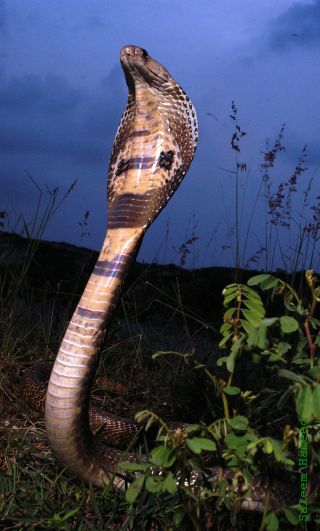
Indian cobra
Photo: Saleem Hameed, CC BY 2.5
Indian cobraReptile, IUCN: Least ConcernNaja najaClick to know more
Oriental rat snake
Photo: Augustus Binu : flickr, CC BY-SA 3.0
Oriental rat snakeReptile, IUCN: Least ConcernPtyas mucosaClick to know more

Animals named in its Wikipedia article (CC BY-SA 4.0, not a government source), which may name animals seen once or no longer found there. IUCN status: Wikidata, from the IUCN Red List. Found only in India: Wikipedia's list of India's endemic animals. Photos: Wikimedia Commons.

About

References : · https://www.thrillophilia.com/wildlife-sanctuaries-in-maharashtra · https://mahaforest.gov.in/index.php/sanctuaries/index/en · https://testbook.com/mpsc-preparation/wildlife-sanctuaries-in-maharashtra The Gautala Autramghat Wildlife Sanctuary is a protected area of Maharashtra state, India. It lies in the Satmala and Ajanta hill ranges of the Western Ghats, and administratively is in Aurangabad District and Jalgaon District. The wildlife sanctuary was established in 1986 in an existing reserved forest area.

About text: Wikipedia (CC BY-SA 4.0), shortened.

Cities nearby on our pages

Ellora
Photo: Vyacheslav Argenberg, CC BY 4.0
ElloraAbout 34 km away in a straight lineClick to know more
Chhatrapati Sambhajinagar (Ajanta, Ellora)
Photo: Amitabha Gupta, CC BY 4.0
Chhatrapati Sambhajinagar (Ajanta, Ellora)About 54 km away in a straight lineClick to know more
Chhatrapati Sambhaji Nagar
Photo: Amitabha Gupta, CC BY 4.0
Chhatrapati Sambhaji NagarAbout 54 km away in a straight lineClick to know more

Tags and facts: Wikidata (CC0), from UNESCO, the Ramsar Convention, the National Tiger Conservation Authority and the Archaeological Survey of India; lists and descriptions from Wikipedia (CC BY-SA 4.0), not a government source; biodiversity hotspots from Conservation International's 2016 map (CC BY-SA 4.0); photos from Wikimedia Commons. Awards: the source named with each.