JanWatchdog (जन निगरानी)

See where public money goes, from the Centre to your district

Support Us

Netravali Wildlife Sanctuary

Wildlife sanctuaryBiodiversity hotspot

Important facts

From Wikipedia's lists and Wikidata, which cite UNESCO, the Ramsar Convention, the NTCA and the Ministry of Environment.

KindWildlife sanctuary
StateGoa
District or townSouth Goa
Area211.05 sq km
Set up1999
Biodiversity hotspotWestern Ghats and Sri Lanka (Conservation International's 2016 map)
Animals named20

Find the way there.

Route on the map

Animals of Netravali Wildlife Sanctuary 20

Found only in India 8

Native to India and found nowhere else in the wild.

Indian giant squirrel
Photo: VinodBhattu, CC BY-SA 4.0
Indian giant squirrelMammal, IUCN: Least ConcernRatufa indica

Only in IndiaState animal of Maharashtra

Click to know more
Grey-headed bulbul
Photo: shrikant rao from bangalore, india, CC BY 2.0
Grey-headed bulbulBird, IUCN: Least ConcernBrachypodius priocephalus

Only in India

Click to know more
Nilgiri wood pigeon
Photo: Atanu Mondal, CC BY-SA 2.5
Nilgiri wood pigeonBird, IUCN: Least ConcernColumba elphinstonii

Only in India

Click to know more
Rufous babbler
Photo: Tisha Mukherjee, CC BY-SA 4.0
Rufous babblerBird, IUCN: Least ConcernArgya subrufa

Only in India

Click to know more
Wayanad laughingthrush
Photo: (text) T C Jerdon; (art) C V Kistnarajoo, Public domain
Wayanad laughingthrushBird, IUCN: Least ConcernPterorhinus delesserti

Only in India

Click to know more
White-bellied blue flycatcher
Photo: Saswat Mishra, CC BY-SA 4.0
White-bellied blue flycatcherBird, IUCN: Least ConcernCyornis pallidipes

Only in India

Click to know more
White-bellied treepie
Photo: Vivekpuliyeri, CC BY-SA 4.0
White-bellied treepieBird, IUCN: Least ConcernDendrocitta leucogastra

Only in India

Click to know more
Papilio buddha
Photo: Vengolis, CC BY-SA 3.0
Papilio buddhaInsect

Only in India

Click to know more

Threatened, on the IUCN Red List 6

Critically Endangered, Endangered, Vulnerable or Near Threatened.

Gaur
Photo: Cyndy Sims Parr, CC BY-SA 2.0
GaurMammal, IUCN: VulnerableBos gaurus

VulnerableState animal of Goa

Click to know more
Great hornbill
Photo: Shantanu Kuveskar, CC BY-SA 4.0
Great hornbillBird, IUCN: VulnerableBuceros bicornis

VulnerableState bird of Arunachal Pradesh

Click to know more
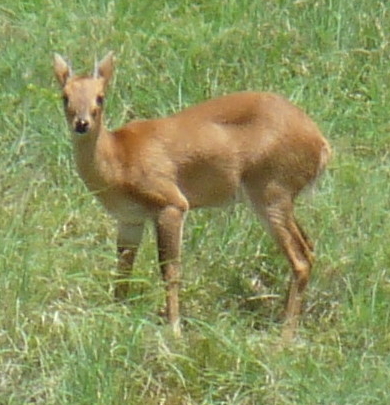
Four-horned antelope
Photo: Mohan Raj, CC BY-SA 3.0
Four-horned antelopeMammal, IUCN: VulnerableTetracerus quadricornis

Vulnerable

Click to know more
Leopard
Photo: Sumeet Moghe, CC BY-SA 4.0
LeopardMammal, IUCN: VulnerablePanthera pardus

Vulnerable

Click to know more
Sloth bear
Photo: Saumitra Newalkar, CC BY-SA 4.0
Sloth bearMammal, IUCN: VulnerableMelursus ursinus

Vulnerable

Click to know more
Idea malabarica
Photo: Joanne Merriam, CC BY-SA 3.0
Idea malabaricaInsect, IUCN: Near Threatened

Near Threatened

Click to know more

Other animals 6

Animals named in its Wikipedia article (CC BY-SA 4.0, not a government source), which may name animals seen once or no longer found there. IUCN status: Wikidata, from the IUCN Red List. Found only in India: Wikipedia's list of India's endemic animals. Photos: Wikimedia Commons.

About

Netravali Wildlife Sanctuary is located in South-Eastern Goa, India. It constitutes one of the vital corridors of the Western Ghats and covers an area of about 211km2. Netravali or Neturli is an important tributary of River Zuari, which originates in the sanctuary.

About text: Wikipedia (CC BY-SA 4.0), shortened.

Cities nearby on our pages

Quepem
Photo: Balou46, CC BY-SA 4.0
QuepemAbout 24 km away in a straight lineClick to know more
Dudhsagar Falls
Photo: Hsp wiki, CC BY-SA 4.0
Dudhsagar FallsAbout 24 km away in a straight lineClick to know more
Palolem
Photo: Satyajit Nayak, CC BY-SA 4.0
PalolemAbout 27 km away in a straight lineClick to know more

Tags and facts: Wikidata (CC0), from UNESCO, the Ramsar Convention, the National Tiger Conservation Authority and the Archaeological Survey of India; lists and descriptions from Wikipedia (CC BY-SA 4.0), not a government source; biodiversity hotspots from Conservation International's 2016 map (CC BY-SA 4.0); photos from Wikimedia Commons. Awards: the source named with each.