

Orang National Park

Important facts
From Wikipedia's lists and Wikidata, which cite UNESCO, the Ramsar Convention, the NTCA and the Ministry of Environment.
Find the way there.
Route on the mapAwards and certifications
Accredited for meeting the global standards for managing a tiger reserve. 14 reserves in India were accredited on 29 July 2021.
Given by Global Conservation Assured | Tiger Standards, announced by the Ministry of Environment, Forest and Climate Change. Source: PIB, Ministry of Environment, Forest and Climate Change, 29 July 2021
Animals of Orang National Park 29
Threatened, on the IUCN Red List 17
Critically Endangered, Endangered, Vulnerable or Near Threatened.


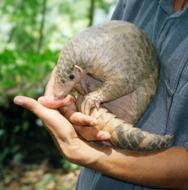


Other animals 12


Animals named in its Wikipedia article (CC BY-SA 4.0, not a government source), which may name animals seen once or no longer found there. IUCN status: Wikidata, from the IUCN Red List. Found only in India: Wikipedia's list of India's endemic animals. Photos: Wikimedia Commons.
About
Orang National Park is a national park in India located on the northern bank of the Brahmaputra River in the Darrang and Sonitpur districts of Assam. It covers an area of 79.28 km2. It was established as a sanctuary in 1985 and declared a national park on 13 April 1999.
About text: Wikipedia (CC BY-SA 4.0), shortened.
Cities nearby on our pages


Tags and facts: Wikidata (CC0), from UNESCO, the Ramsar Convention, the National Tiger Conservation Authority and the Archaeological Survey of India; lists and descriptions from Wikipedia (CC BY-SA 4.0), not a government source; biodiversity hotspots from Conservation International's 2016 map (CC BY-SA 4.0); photos from Wikimedia Commons. Awards: the source named with each.