JanWatchdog (जन निगरानी)

See where public money goes, from the Centre to your district

Support Us

Simlipal National Park

UNESCO biosphere reserveTiger reserveNational parkWildlife sanctuary

Important facts

From Wikipedia's lists and Wikidata, which cite UNESCO, the Ramsar Convention, the NTCA and the Ministry of Environment.

KindTiger reserve, National park, Wildlife sanctuary
StateOdisha
District or townMayurbhanj
Area4,374 sq km
Tiger reserve area, core and buffer2,750 sq km
Set up1980
Tiger reserve since1973
Tigers counted in 202216 (NTCA estimate)
Biosphere reserve sinceYes
In UNESCO's biosphere network since2009
Animals named18

Find the way there.

Route on the map

Animals of Simlipal National Park 16

Threatened, on the IUCN Red List 8

Critically Endangered, Endangered, Vulnerable or Near Threatened.

Bengal tiger
Photo: Tisha Mukherjee, CC BY-SA 4.0
Bengal tigerMammal, IUCN: EndangeredPanthera tigris tigris

EndangeredNational animal of India

Click to know more
Gaur
Photo: Cyndy Sims Parr, CC BY-SA 2.0
GaurMammal, IUCN: VulnerableBos gaurus

VulnerableState animal of Goa

Click to know more
Sambar deer
Photo: Rashityagi, CC BY-SA 4.0
Sambar deerMammal, IUCN: VulnerableRusa unicolor

VulnerableState animal of Odisha

Click to know more
Great hornbill
Photo: Shantanu Kuveskar, CC BY-SA 4.0
Great hornbillBird, IUCN: VulnerableBuceros bicornis

VulnerableState bird of Arunachal Pradesh

Click to know more
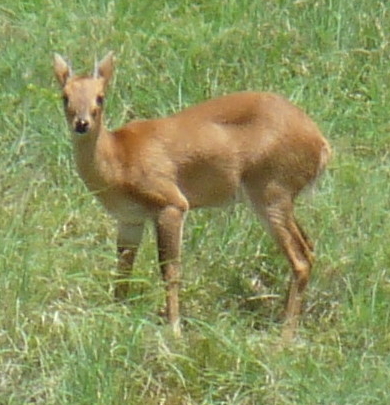
Four-horned antelope
Photo: Mohan Raj, CC BY-SA 3.0
Four-horned antelopeMammal, IUCN: VulnerableTetracerus quadricornis

Vulnerable

Click to know more
Leopard
Photo: Sumeet Moghe, CC BY-SA 4.0
LeopardMammal, IUCN: VulnerablePanthera pardus

Vulnerable

Click to know more
Mugger crocodile
Photo: Karunakar Rayker from India, CC BY-SA 2.0
Mugger crocodileReptile, IUCN: VulnerableCrocodylus palustris

Vulnerable

Click to know more
Malabar pied hornbill
Photo: Charles J. Sharp, CC BY-SA 4.0
Malabar pied hornbillBird, IUCN: Near ThreatenedAnthracoceros coronatus

Near Threatened

Click to know more

Famous here 2

Named in the description of this place, or a national or State animal or bird.

Indian elephant
Photo: Yathin S Krishnappa, CC BY-SA 3.0
Indian elephantMammalElephas maximus indicus

National heritage animal of India

Click to know more
Indian grey hornbill
Photo: J.M.Garg, CC BY-SA 3.0
Indian grey hornbillBird, IUCN: Least ConcernOcyceros birostris

State bird of Chandigarh

Click to know more

Other animals 6

Jungle cat
Photo: L. Shyamal, CC BY-SA 3.0
Jungle catMammal, IUCN: Least ConcernFelis chausClick to know more
Wild boar
Photo: Valentin Panzirsch, CC BY-SA 3.0 at
Wild boarMammal, IUCN: Least ConcernSus scrofaClick to know more
Alexandrine parakeet
Photo: Charles J. Sharp, CC BY-SA 4.0
Alexandrine parakeetBirdPsittacula eupatriaClick to know more
Crested serpent eagle
Photo: Preveen at English Wikipedia, CC BY 2.5
Crested serpent eagleBird, IUCN: Least ConcernSpilornis cheelaClick to know more
Red junglefowl
Photo: Subramanya C K, CC BY-SA 3.0
Red junglefowlBird, IUCN: Least ConcernGallus gallusClick to know more

Animals named in its Wikipedia article (CC BY-SA 4.0, not a government source), which may name animals seen once or no longer found there. IUCN status: Wikidata, from the IUCN Red List. Found only in India: Wikipedia's list of India's endemic animals. Photos: Wikimedia Commons.

About

Simlipal National Park is a national park and tiger reserve in the Mayurbhanj district in the Indian state of Odisha covering 2,750 km2. It is part of the Mayurbhanj Elephant Reserve, which includes three protected areas, Simlipal Tiger Reserve, Hadgarh Wildlife Sanctuary with 191.06 km2 and Kuldiha Wildlife Sanctuary with 272.75 km2. Simlipal National Park derives its name from the abundance of red silk cotton trees growing in the area.

About text: Wikipedia (CC BY-SA 4.0), shortened.

Cities nearby on our pages

Simlipal National Park
Photo: Byomakesh07, CC BY-SA 3.0
Simlipal National ParkAbout 9 km away in a straight lineClick to know more
Baripada
Photo: MaxA-Matrix, CC BY-SA 4.0
BaripadaAbout 45 km away in a straight lineClick to know more
Mayurbhanj
Photo: Nihar.race, CC BY-SA 4.0
MayurbhanjAbout 46 km away in a straight lineClick to know more

Tags and facts: Wikidata (CC0), from UNESCO, the Ramsar Convention, the National Tiger Conservation Authority and the Archaeological Survey of India; lists and descriptions from Wikipedia (CC BY-SA 4.0), not a government source; biodiversity hotspots from Conservation International's 2016 map (CC BY-SA 4.0); photos from Wikimedia Commons. Awards: the source named with each.